


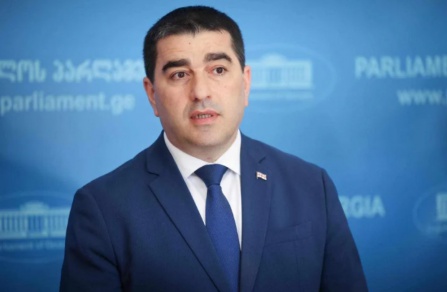
 Speaker: Blackmail will not succeed, Georgia continues preparations for membership of true EU, founded on genuine European values
"It would be good, at least today, to hear Brussels' clear, unambiguous position on radical groups in Georgia, on the overthrow of the government, behind which the threads lead back to Brussels," the Speaker of the Georgian Parliament, Shalva Papuashvili, stated at a briefing today.
According to Papuashvili, this situation clearly illustrates how the European bureaucracy treats the Georgian state, its people, and their democratic choices.
"Today is November 4, and I would like to begin by reminding you that exactly one month ago, on October 4, radical political groups - supported by certain representatives from Brussels - violently stormed the presidential palace. The state narrowly avoided bloodshed and a return to chaos. It would be good, at least today, to hear Brussels' clear position on these radical groups and the attempted overthrow of the government, behind which the threads lead back to Brussels.
This incident best illustrates the attitude of the European bureaucracy toward the Georgian state, the Georgian people, and their democratic choices-a bureaucracy driven by a hidden political agenda, marked by arrogance and disrespect toward any country that dares to act independently rather than submit blindly to its dictates.
A vivid example of this attitude is found in the enlargement report on Georgia presented today by the European Commission, which combines outdated accusations, falsehoods, hostile rhetoric, and deliberate harm. This is not the real Georgia, but rather the distorted image seen from the offices of Brussels.
The latest EU enlargement report continues this tradition. The section evaluating Georgia's measurable progress is written in dry, minimal language, while the political portion is overtly aggressive and unfair.
We must therefore state clearly that such a biased, anti-democratic, and polarizing approach reflects a deep crisis within the EU's governing institutions themselves. It is no surprise, then, that Brussels avoids dialogue and prefers an arrogant tone," Papuashvili said.
The Speaker also claimed that Brussels was using "ethnic epithets" and accusing Georgia of spreading "Russian disinformation," while ignoring what he described as interference by EU ambassadors in Georgia's elections and the political financing of NGOs and media outlets.
"The report distorts the truth about the Parliamentary Investigative Commission, portraying it as a tool of retaliation against the opposition, while in reality it seeks to uncover the truth about the crimes of the Saakashvili regime-crimes Brussels continues to overlook, thereby mocking that regime's victims.
It also misrepresents the Law on Transparency of Foreign Influence, falsely framing it as a violation of fundamental rights, despite its close resemblance to Western analogues. At the same time, Brussels ignores the fact that EU funds are being used to finance radicalism and disinformation-because acknowledging this would expose its own schemes.
Today, we are witnessing a troubling moment in history: Brussels is moving away from Europe and from the values it was originally meant to uphold. Instead of defending democracy and human rights, it has become an ideologized bureaucratic machine, determined to silence critics and eliminate opponents by any means necessary.
This regression became evident in the summer of 2022, when Georgia was unjustly denied EU candidate status, despite outperforming Moldova and Ukraine in nearly every measurable area of integration. The goal was clear-to create unrest and destabilize Georgia.
Since then, instead of promoting democracy, economic freedom, social responsibility, peace, and cooperation, Brussels has sought to impose ideological and political control over Georgia. This pressure is driven by certain factions within the European Commission and Parliament-some of them post-Soviet politicians-who pursue narrow geopolitical interests and attempt to drag Georgia into deeper conflict with Russia, at the expense of its own security and territorial integrity. This stands in direct contradiction to the core European ideal of peace and conflict resolution.
The same regression is visible in Brussels' actions within Georgia, where it supports groups that spread hatred instead of reconciliation, polarization instead of consensus, and violence instead of dialogue.
Such interference also includes the denial of legitimate, democratic elections-without evidence-and the disregard of OSCE/ODIHR reports. Since 2020, this has become systematic. Under the guise of defending democracy and human rights, Brussels has in fact backed radical and violent opposition forces, many linked to the repressive Saakashvili regime.
This pattern was once again evident when Brussels provided political support to the violent groups that attempted to storm the presidential palace on October 4th.
Today, Brussels continues to manipulate values, while the Georgian government and people remain steadfast in their commitment to true democratic and European principles: tolerance, the rule of law, and respect for peace and development.
It is increasingly clear that Brussels' goal is to disillusion the Georgian people with the idea of European integration-fearing that, like Hungary, Slovakia, and now the Czech Republic, Georgia too will refuse to obey its dictates.
But Georgia will not yield to pressure or blackmail. We have faced such challenges throughout our history. We will continue to prepare our country for EU membership-not for the version of the Union stripped of its essence by the current Brussels bureaucracy, but for the true European Union, founded on genuine European values.
Across Europe, we are witnessing an awakening. One by one, nations are electing governments that seek to restore the EU to its foundational value system-rejecting Brussels' unjust interference in internal affairs, national identity, the will of the people, true democracy, and the rule of law.
We clearly see that Georgia's future is tied to the path of development based on genuine European values. We will expose injustice, fight for truth, and stand firm until the end," the Speaker concluded.
მსგავსი სიახლეები
Speaker: Blackmail will not succeed, Georgia continues preparations for membership of true EU, founded on genuine European values
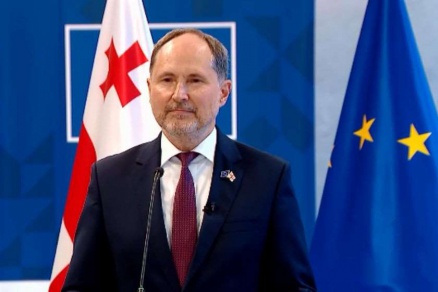 Instead of demonising EU, authorities must revert to EU integration track -Ambassador Herczyński
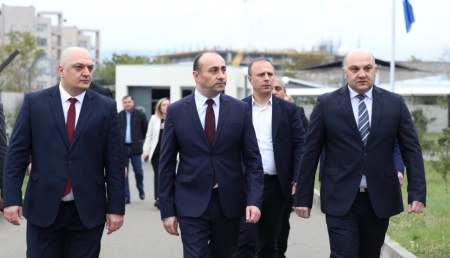 Interior Minister meets Migration Department Director
 EC publishes EU Enlargement Report
 Koba Kobaladze awarded the participants of Zurab Iarajuli Memorial Tournament
 Competition named after the hero of August War was held in mini football
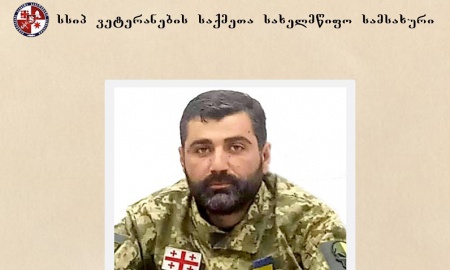 Koba Kobaladze offered his condolences to the family of Georgian soldier killed in Ukraine
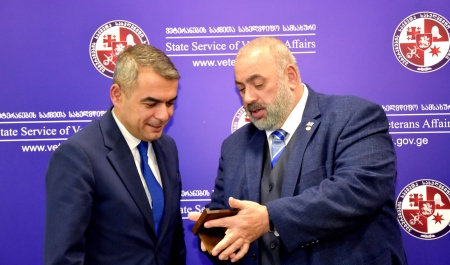 Koba Kobaladze held a meeting with the Turkish military attache
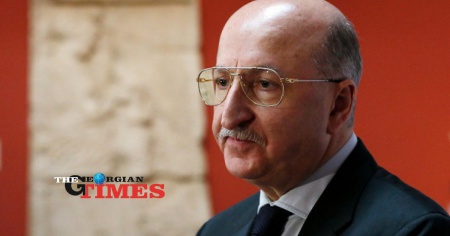 An exclusive interview of “The Georgian Times” with a famous Georgian businessman Davit Iakobashvili
 Chapidze Emergency Cardiology Center to hold a charity campaign
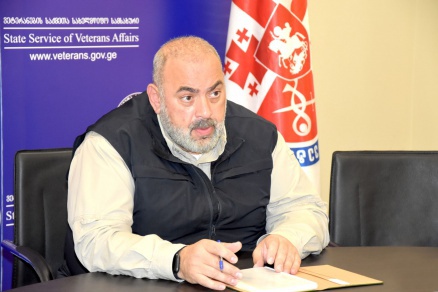 “There is a time when you have to fight and there is a time when you have to prepare for this fight...” - Koba Kobaladze
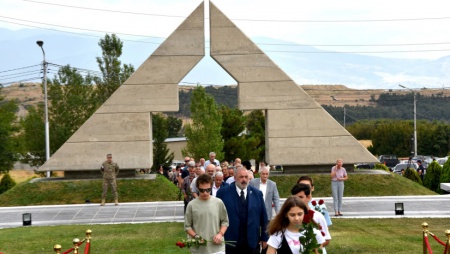 Koba Kobaladze laid a wreath at the graves of the soldiers died in the war of August 8 and paid tribute to the memory of the heroes who fell on the battlefield for the unity of the country
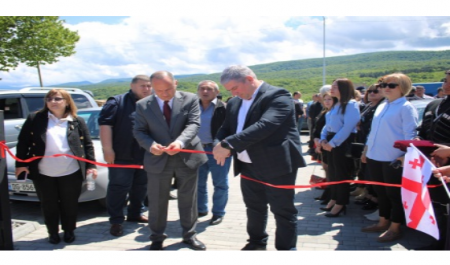 Nikoloz Kvezereli attended the events dedicated to the Independence Day in Akhmeta Municipality
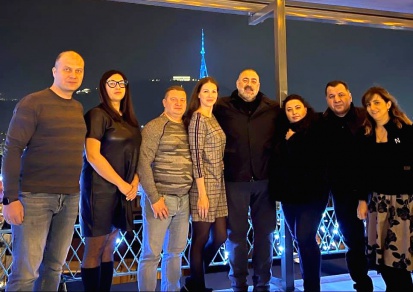 Koba Kobaladze met with the representatives of “TAPS Ukraine”
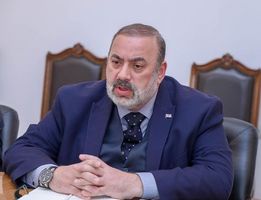 Koba Kobaladze continues his official visit to Ukraine
 U.N. Members Stand By Georgia, Condemn Occupations
 Memorandum of Understanding with the charitable foundations REGI BASE and REGI BASE GEORGIA
 EU: Israeli response 'needs to be proportionate and with maximum restraint'
 The United States Embassy is deeply concerned by the government’s decision to detain the head of a major opposition political party at the party’s headquarters this morning
 Majority of U.S. senators urge Biden to press Turkey on rights